
The Four Tiers of the Market: A Luxury Brand Positioning Guide
Oct 09, 2026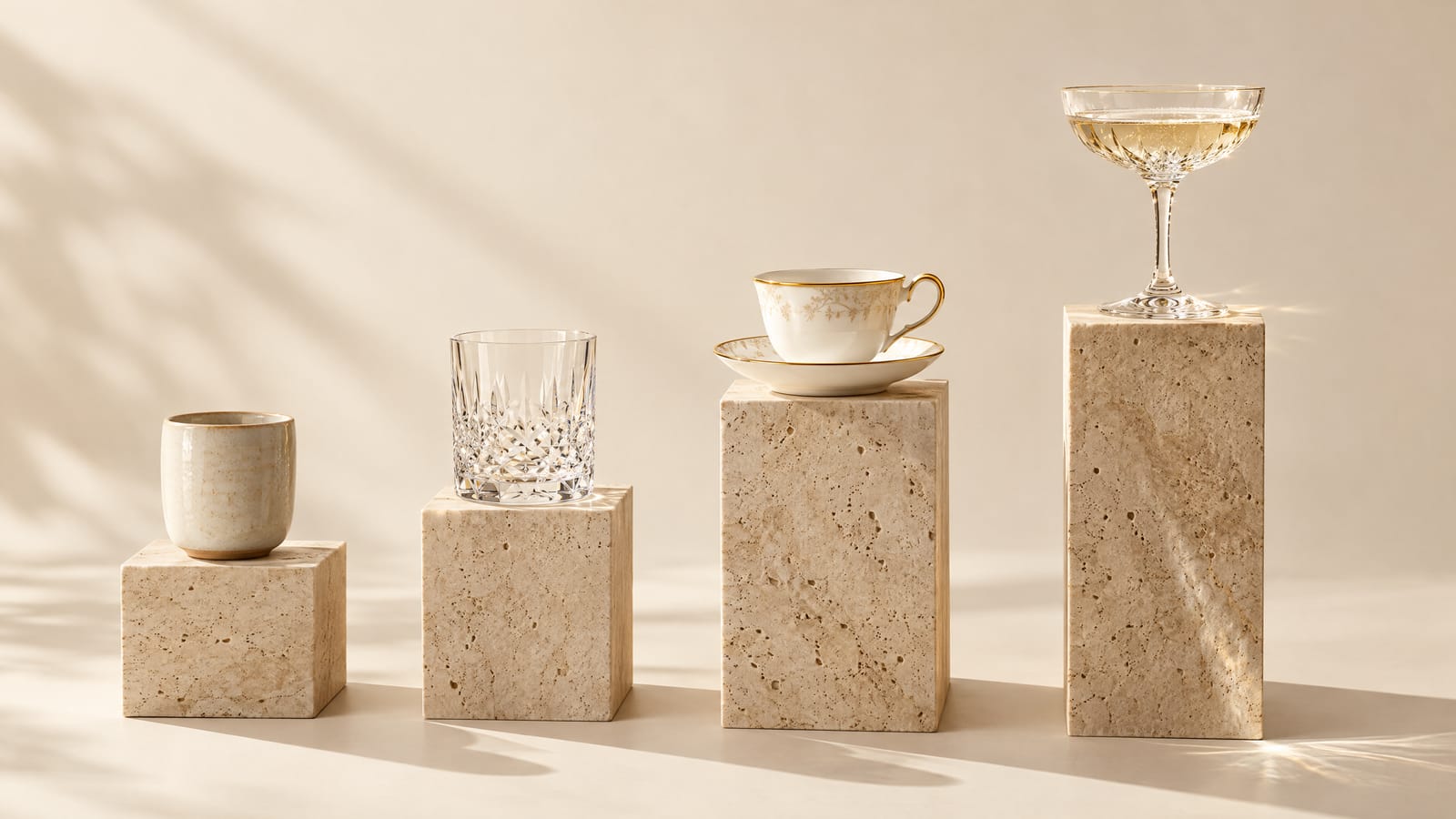
Luxury brand positioning is the decision about which buyer your business speaks to, followed by the discipline to make every touchpoint answer that buyer's first question. In Erica's Tiers of the Market framework there are four buying tiers: Cost-Conscious, Premium, Luxury, and Ultra-Luxury. Each one asks a different question before it buys.
The four questions differ by only a word or two, yet those words decide how you should write your website, answer an inquiry, and open a proposal. Most service businesses that struggle to attract high-end clients are not short on talent. They answer one tier's question on Instagram, another's on the website, and a third's in the inbox, and the buyer they want most notices.
What are the four tiers of the market?
The tiers describe buying priorities: what a buyer weighs first when deciding whether to hire you. The model comes from Erica's approach to client attraction, shaped by 25 years across luxury events, custom branding, interior design, and publishing.
Cost-Conscious
The core question is "Do I like it, and can I afford it?" This buyer looks for a deal or a package price, compares proposals, and tends to put price ahead of incremental quality. Erica's teaching treats this as an economic distinction, not a judgment of anyone's taste. A business can serve this tier with a deliberately designed lower-scope offer, or respectfully decline work that does not suit its economics.
Premium
The core question is "Do I love it, and can I afford it?" "Like" has become "love." This buyer values quality and will accept a modest premium for quality they can see, while still holding an intentional budget. Premium projects can be excellent-fit and profitable when scope and economics work.
Luxury
The core question is "Do I love it, and is it worth it?" Now "afford" has become "worth." Cost may still be considered, but value, quality, and the overall experience carry more weight. Some Luxury buyers will allocate more when they see meaningful value. The framework never assumes they will stretch, and it never treats a higher fee as proof of quality.
Ultra-Luxury
The opening question shortens to "Do I love it?" Worth still matters, but the first filter is the experience itself: precision, individual attention, distinctiveness, prestige, and what Erica's teaching calls the "wow factor." These buyers may opt out when an experience feels less than luxurious or the execution is not smooth. The principle is "pay more for more," meaning more meaningful value, never a willingness to pay any amount.
The four tiers at a glance
The first two columns come straight from the framework. The other two are a practical reading of how those questions tend to show up in your touchpoints.
| Tier | What they ask first | What tends to reassure them | What tends to push them away |
|---|---|---|---|
| Cost-Conscious | Do I like it, and can I afford it? | Clear package pricing and a defined scope | Vague pricing and extras that stretch past a stated budget |
| Premium | Do I love it, and can I afford it? | Quality they can see and a clear reason for the premium | A higher fee with no visible difference in quality |
| Luxury | Do I love it, and is it worth it? | Value made clear before the fee, personalization, ease, and trust | Price raised before value is clear, or a reply that feels transactional |
| Ultra-Luxury | Do I love it? (Worth still matters.) | Precision, individual attention, distinctiveness, and seamless execution | Any friction, or an experience that feels standard |
Premium vs luxury: why the difference matters
Both buyers care about quality. The difference lives in the second half of the question. A Premium buyer is still asking whether they can afford it, so visible quality at a sensible price reassures them. A Luxury buyer is asking whether it is worth it, so they need value made clear before the fee and an experience that feels considered from the first reply.
In practice, premium often means adding more volume: more hours, more deliverables. Luxury means more meaningful value: considered decisions, personalization, ease, and trust. A photographer who answers a luxury inquiry with a three-package grid and a page of add-ons is speaking Premium fluently. Nothing in that reply is wrong. It simply answers a question her ideal client did not ask. That is why high end brand positioning is less about adjectives and more about sequence: what you show first, what you ask first, and when price enters the conversation.
Tiers describe buying priorities, not people
A tier describes what someone prioritizes in a particular purchase. It is never a label for a person. The same person may compare prices on office supplies, buy a car on a firm budget, and ask only "Do I love it?" when planning a daughter's wedding. They have not changed. What they are buying has.
So never assume a buyer's resources from appearances or a first question. Erica's teaching is explicit that a wealthy client does not necessarily trust an expert, and a budget-conscious client is not inherently difficult. And respect a stated budget: positioning for Luxury buyers means meeting their standards, not persuading anyone to spend beyond what they have told you.
Why do mixed signals across tiers confuse buyers?
Every touchpoint answers a buyer's question, whether you intend it to or not. When the answers come from different tiers, the buyer receives a mixed signal, and a mixed signal reads as uncertainty.
Picture an interior designer with a portfolio of finished estates, a hero line that reads "Affordable luxury for every budget," and an auto reply that attaches a price sheet. The portfolio speaks to Ultra-Luxury. The hero line speaks to two tiers in five words. The price sheet answers "Can I afford it?" before anyone has asked. A Luxury buyer wonders whether this designer understands what they want. A Cost-Conscious buyer assumes the work is out of reach. Both leave, and the designer concludes the market is slow.
More marketing rarely fixes this. Traffic only amplifies what's already there, so more visibility simply sends more people into the same mixed signal.
A quick tier audit of your touchpoints
Walk through your client journey and note which tier's question each touchpoint answers first:
- Your social profile and the work you feature most.
- Your website hero line and first image.
- Your inquiry form and the questions it asks.
- Your auto reply or first personal response.
- Your consultation: what you ask, and what you leave out.
- Your proposal: the first page, and where the fee appears.
- Your follow up after the proposal.
Where the answers stop matching is where your ideal buyer is most likely to hesitate.
How to choose your luxury brand positioning
Deciding which tier your brand speaks to is a business decision before it is a design decision. Erica's Priceless Client philosophy begins with one question: who are the clients who will pay you the most and treat you well? The tiers help you answer it with evidence rather than aspiration.
- Start with your actual projects. Mark the recent engagements that fit best: work you were proud of, clients who valued your guidance, strong profit for the time invested. Which question were those clients asking?
- Check the economics. Each tier expects a different experience, and that experience has a cost. Erica's framework puts it as less for less and more for more: scope and experience should correspond to price. Choose a tier you can serve well at a margin that works. For why a full calendar can hide thin margins, read Busy Is Not Profitable.
- Test your proof. Do your portfolio, process, and current client experience support the tier you want? What are leading professionals in your market offering at that level? Signaling a tier you cannot yet deliver invites the disappointment Ultra-Luxury buyers notice first.
- Read your inquiries. If they keep leading with "What's your cheapest package?" rather than scope or experience, your positioning may be landing in a different tier than you intend. Confirm the pattern in your inquiry records.
- Choose one primary tier and let it set the standard. You can still serve an adjacent tier through a deliberately designed offer. What you avoid is letting each touchpoint drift toward a different buyer.
Strong luxury market positioning is the sum of those answers, applied consistently. Once your signals agree, How to Attract Luxury Clients covers the next step.
Exercise: rewrite one touchpoint for the tier you serve
Choose one touchpoint you can change this week: an inquiry reply, the opening of your proposal, or your website hero line. Then:
- Write your tier's question at the top of the page.
- Underline every phrase in your current version that answers a different tier's question.
- Rewrite the first sentence so it answers your tier's question directly.
- Read it aloud as your ideal buyer. Does any line make you wonder whether this business is for you?
A worked example: an inquiry reply for the Luxury tier
Here is a hypothetical reply from an event planner, before:
Thanks for reaching out. I've attached our pricing guide with all three packages so you can compare options. Let me know which one fits your budget and I'll send over a contract.
It is friendly and efficient, and it answers "Can I afford it?" Here it is rewritten for a buyer asking "Do I love it, and is it worth it?"
Thank you for thinking of us for your celebration. Before we talk about investment, I would love to understand what you are picturing: how you want your guests to feel, the details that matter most, and what would make planning feel easy. I have set aside time for a private consultation, and afterward I will prepare a proposal designed around what you share.
The rewrite does not hide the fee. It puts value, personalization, and a considered process ahead of it, which is the order a Luxury buyer expects. If you prefer to share an investment range earlier, an optional range question on your inquiry form does that respectfully and helps the right clients self-select.
The same principle applies to a hero line. For a Luxury interior designer, "Affordable luxury for every budget" might become "Homes designed around the way you live, with a process as considered as the finished rooms."
Bring your tier into every decision
Positioning lives in dozens of small decisions: how you answer an inquiry, what you feature, when you name a fee, which projects you accept. That is the ongoing thinking Evren, Your Priceless Concierge, is built for. She is trained on Erica's methodology, including the Tiers of the Market, remembers your earlier conversations, and is available 24/7. When the work turns to consultations and proposals, she knows when to bring in Rune, The Luxury Closer. Start with Evren and bring her the touchpoint you rewrote today.
Frequently asked questions
What is the difference between premium and luxury brand positioning?
In the Tiers of the Market framework, a Premium buyer asks "Do I love it, and can I afford it?" while a Luxury buyer asks "Do I love it, and is it worth it?" Premium positioning pairs visible quality with a sensible price. Luxury positioning makes value, personalization, and a considered experience clear before the fee.
Do the Tiers of the Market describe how wealthy a client is?
No. The tiers describe buying priorities in a particular purchase, not fixed traits of people or their resources. The same client may be Cost-Conscious about one purchase and Ultra-Luxury about another, such as a wedding or a family home. Never assume what a buyer can afford from appearances, and always respect a budget they have stated.
Can one service business serve more than one market tier?
Yes, with intention. Choose one primary tier and let it set the standard for your brand, inquiry process, and proposals. Serve an adjacent tier through a deliberately designed offer with its own scope, or respectfully decline work that does not suit your economics. Confusion starts when touchpoints drift between tiers without a plan.